
The Lowdown: Cementitious vs Epoxy Grouting

Here’s the lowdown on grouting: it’s the stuff that fills the gaps, and keeps everything in place. It is a fluid or semi-fluid substance that’s also used to seal joints, strengthen structures, and offer support in a variety of construction applications. When it’s done right, it makes the space look clean, cohesive, and built to last.
The two main types of grouting are Cementitious grouting and Epoxy grouting. What are the main differences between both? Which should you pick for your space? Let’s take a closer look at the two options and break down what sets them apart, so you can decide which one works best for your needs.
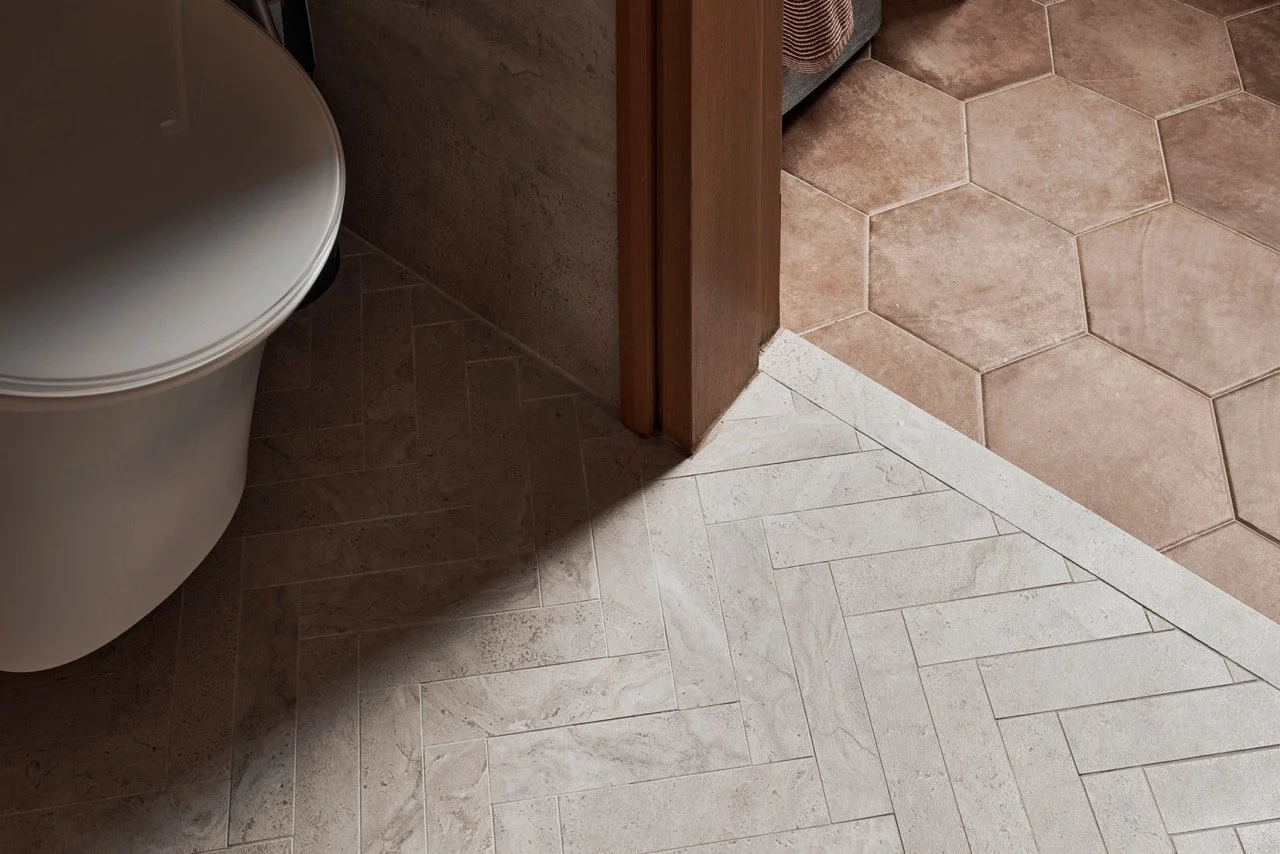
Cementitious grout is a traditional type of grout made primarily from cement and water. Popular brands like Mapei, Davco, and Laticrete offer a wide range of cementitious grout options in different colours and finishes. In terms of texture and finish, it is slightly porous with a matte look. It is generally strong. However, a bit more care might be required for high-moisture environments or areas that experience heavy foot traffic.
Cementitious Grouting
Epoxy Grouting
Epoxy grout is made from epoxy resins and a hardener, often mixed with filler powders for consistency. Unlike cementitious grout, it’s chemical-based rather than cement-based, which gives it unique properties.
It is smooth and non-porous, and while often associated with a glossy finish, it can also come in semi-gloss or matte options depending on the product. It is favoured for its durability, as it is very strong and highly resistant to cracking, stains, chemicals, and water.
However, the drawback of epoxy grouting is that it is generally more expensive, largely due to the higher material cost and the skill required for installation. It sets quickly and requires careful handling and cleaning during application, making it more challenging to work with compared to cementitious grout.
Which should you pick for your space?
If you are deliberating between which to pick for your space, start by looking at these factors:
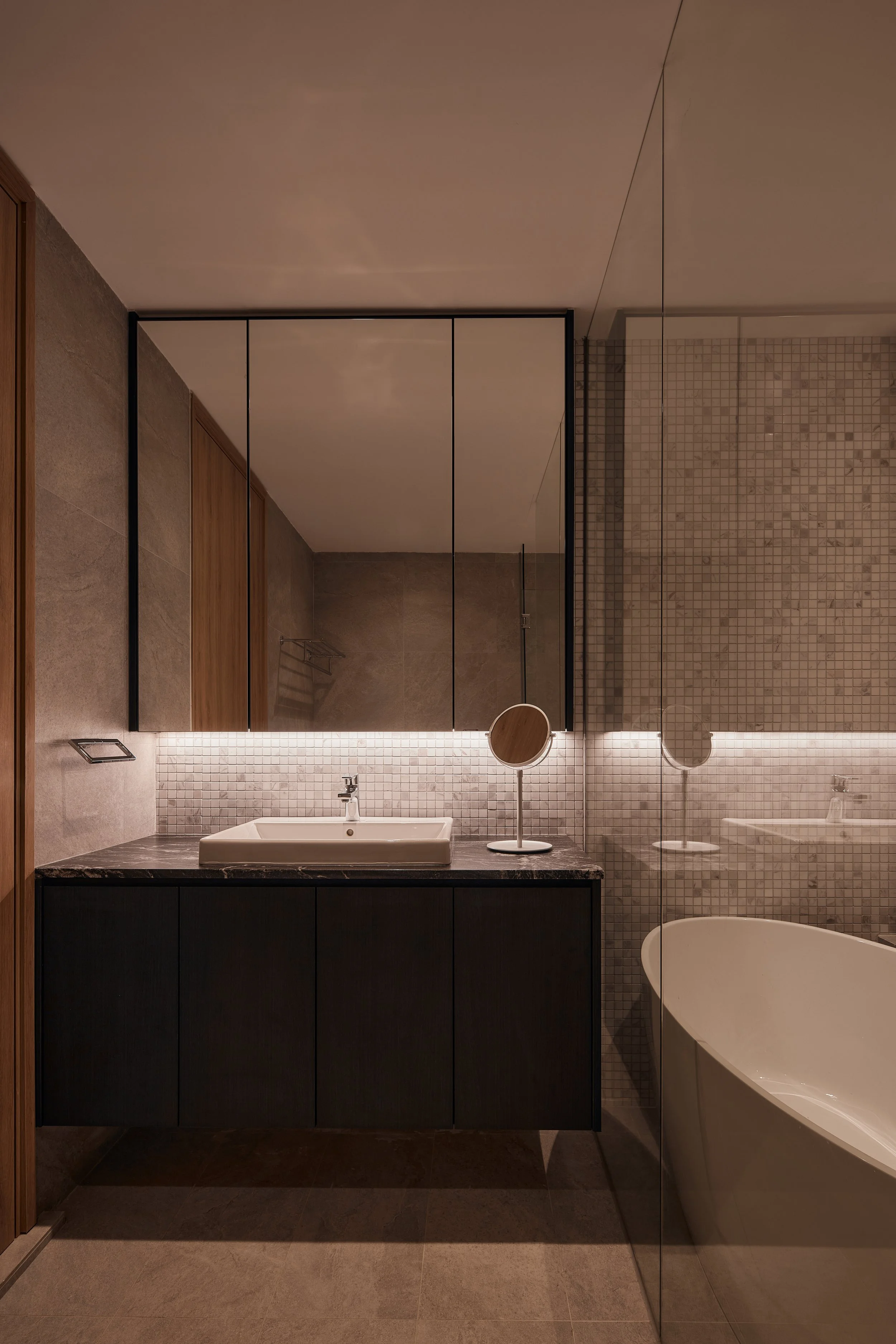
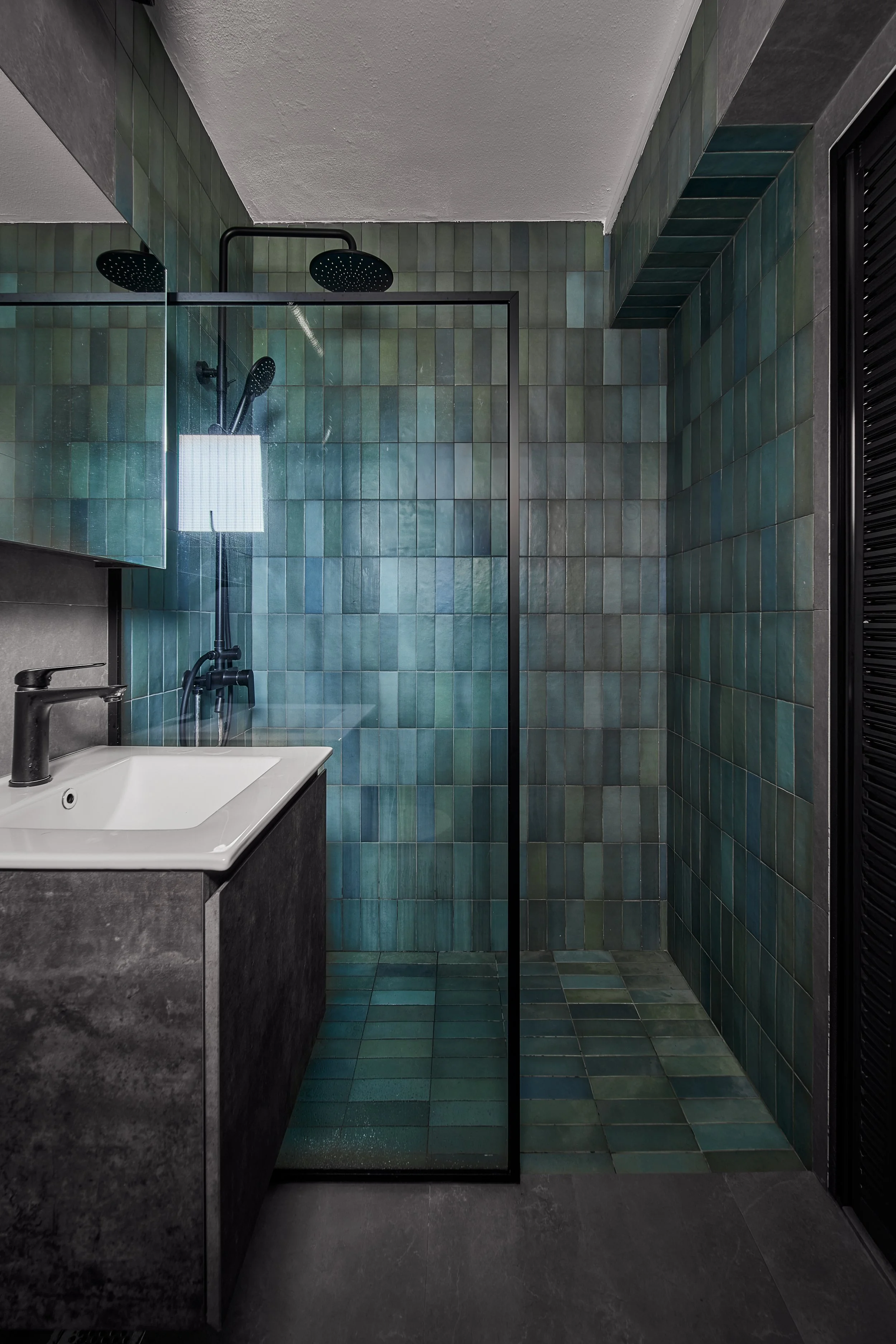
Moisture Exposure:
If the space is exposed to a lot of moisture, such as bathrooms and kitchens, it is worth considering epoxy grout due to its water and stain-resistant properties.
For areas with lower moisture exposure, such as living rooms and bedrooms, cementitious grout might be preferred as a more cost-effective solution.
Traffic:
For spaces that see high foot traffic like entryways or commercial areas, choosing epoxy grout would make sense as it is highly durable and resists cracking and wear.
For low-contact surfaces, such as walls, cementitious grout works well as it is easier to apply and more cost-effective.
Maintenance:
If you are not too keen on maintenance, epoxy grout is the way to go as it is stain and water-resistant and does not require sealing.

Grouting may seem like a small detail, but it plays a big role in the overall finish of your space. Picking the right type ensures your tiles stay strong, attractive, and long-lasting. With the right choice, your floors and walls can look great for years to come.